From years of practiceto a structured methodology.
Years of designing complex digital products revealed a recurring challenge: the most important decisions often begin long before the interface, in understanding business rules, user roles, workflows and the relationships between them.
Across different industries and projects, I developed and refined an approach to connecting these elements before designing individual screens.
That approach became S2I (Systems-to-Interfaces) — a structured methodology built on established design disciplines and years of practical experience, now documented through a book, decision-making tools and an independent educational platform.
- Role
- Author · Creator of the methodology
- Collaboration
- Independent project
- Scope
- Methodology book, workbook, brand, website, distribution
(01)Where the thinking beganOrigin
The gap between system logic and the interface.
Research, business requirements and technical constraints often live in separate places, making it difficult to understand how they should inform interface decisions.
I began developing a structured approach to connect these elements and make the reasoning behind design decisions easier to follow.
(02)The methodologyFive stages · seven principles
The architecture of S2I.
That approach took shape as a methodology built on established design disciplines, connecting research, task analysis, information architecture and usability testing.
Five stages provide the structure, seven UX principles guide decisions throughout, and practical tools link interface requirements to the system behind them.
Seven UX principles
Integrity of workflows
Adapting the interface to role and task
Feedback and visible state
Decision support: context, actions, consequences
Interface consistency and evolution
Validation with target users
(03)Practical applicationBook · workbook · tools
From methodology to practice.
The methodology connects research and system logic to interface decisions through three core tools.
Together, they document the initial decision context, explain the reasoning behind interface requirements and preserve that information through engineering handoff.
Decision situation description
Defines the role, the object of work, its state and the decision required.
Interface requirement rationale
Connects interface requirements to the underlying system logic.
Handoff check
Helps preserve requirements and system logic as work moves into engineering.
(04)Educational resourcesBook · workbook · board
Bringing the methodology to life.
The next step was making the methodology accessible to designers beyond my own projects.
The book explains the approach through examples, the workbook supports practical application, and an interactive board provides a space to map workflows, explore dependencies and work through decisions.
Together, these resources support both individual learning and practical use within product teams.
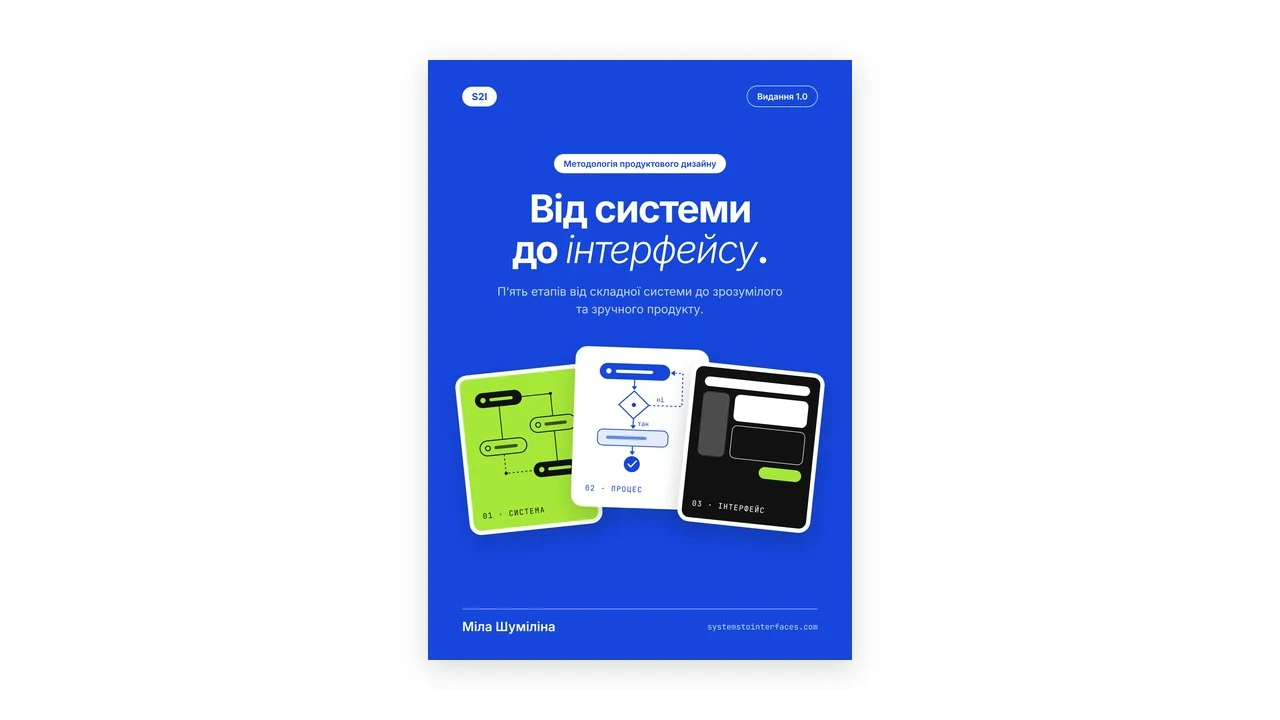 The book
The methodology
The five stages, seven principles and worked examples from complex products — a Ukrainian print edition and an English ebook.
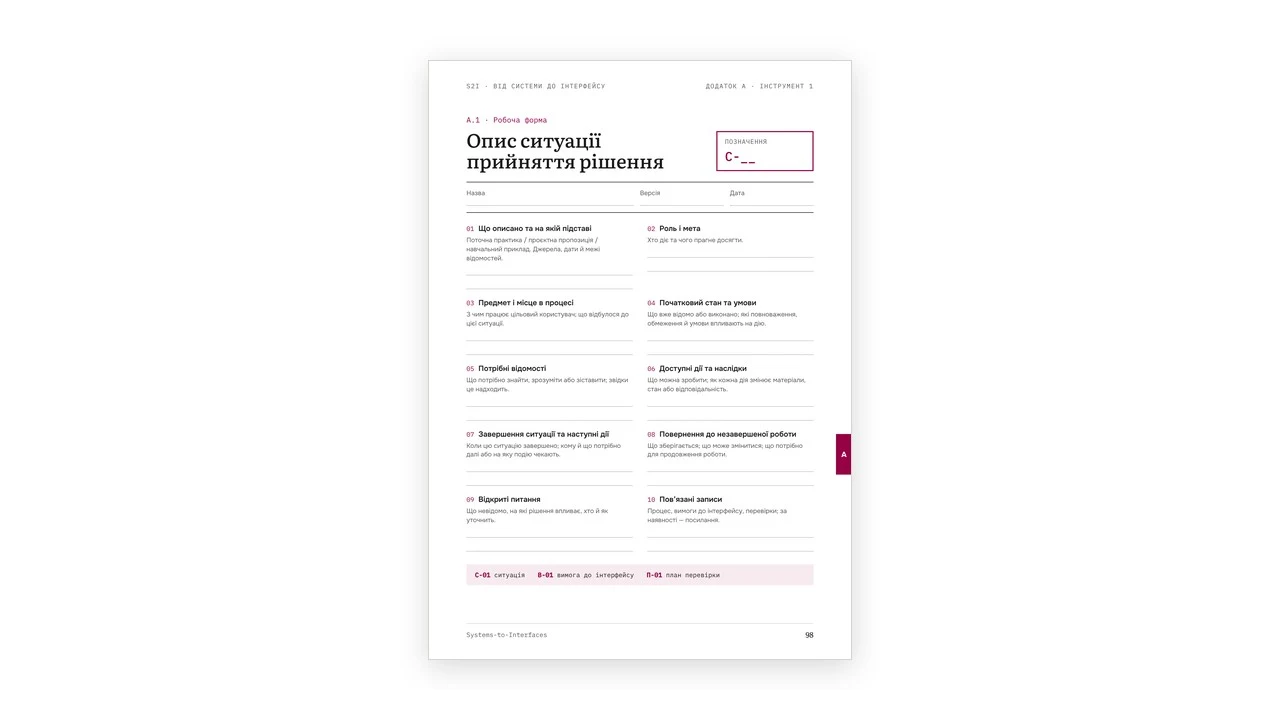 The workbook
Guided application
Fillable forms with completed examples for applying S2I to real product challenges.
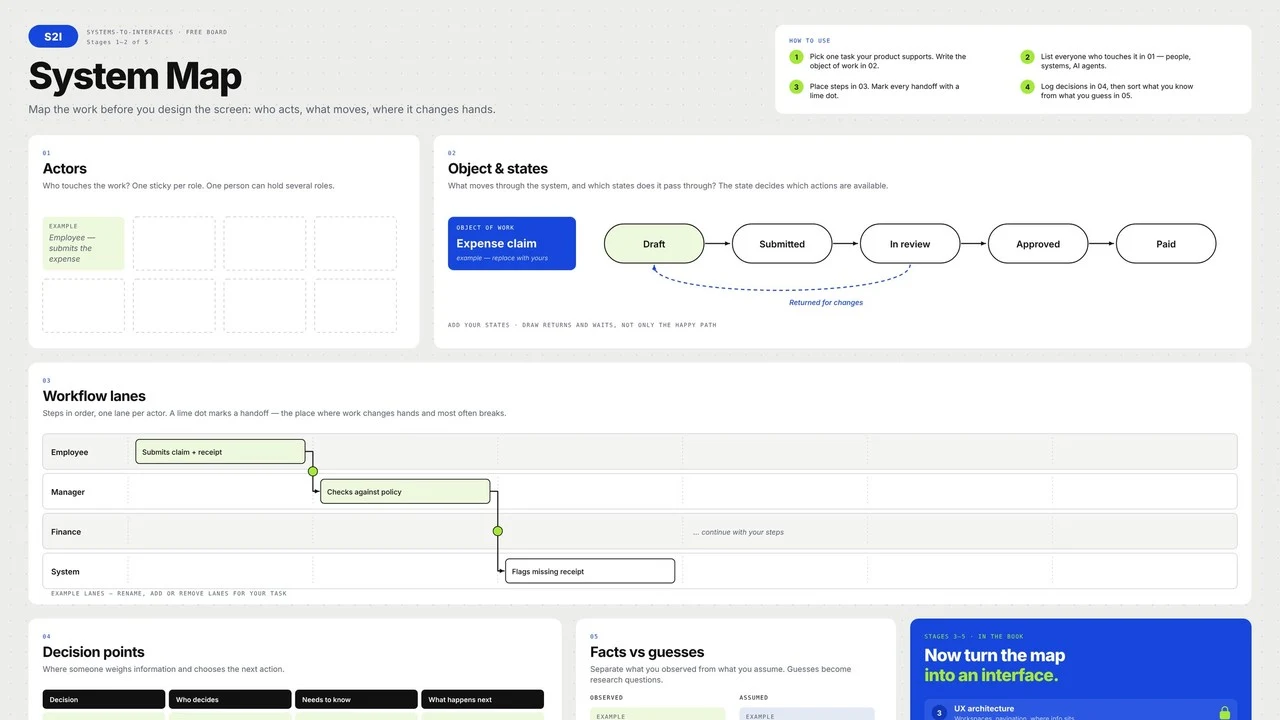 The board
A space to map the system
A visual workspace for mapping roles, processes, dependencies and decisions.
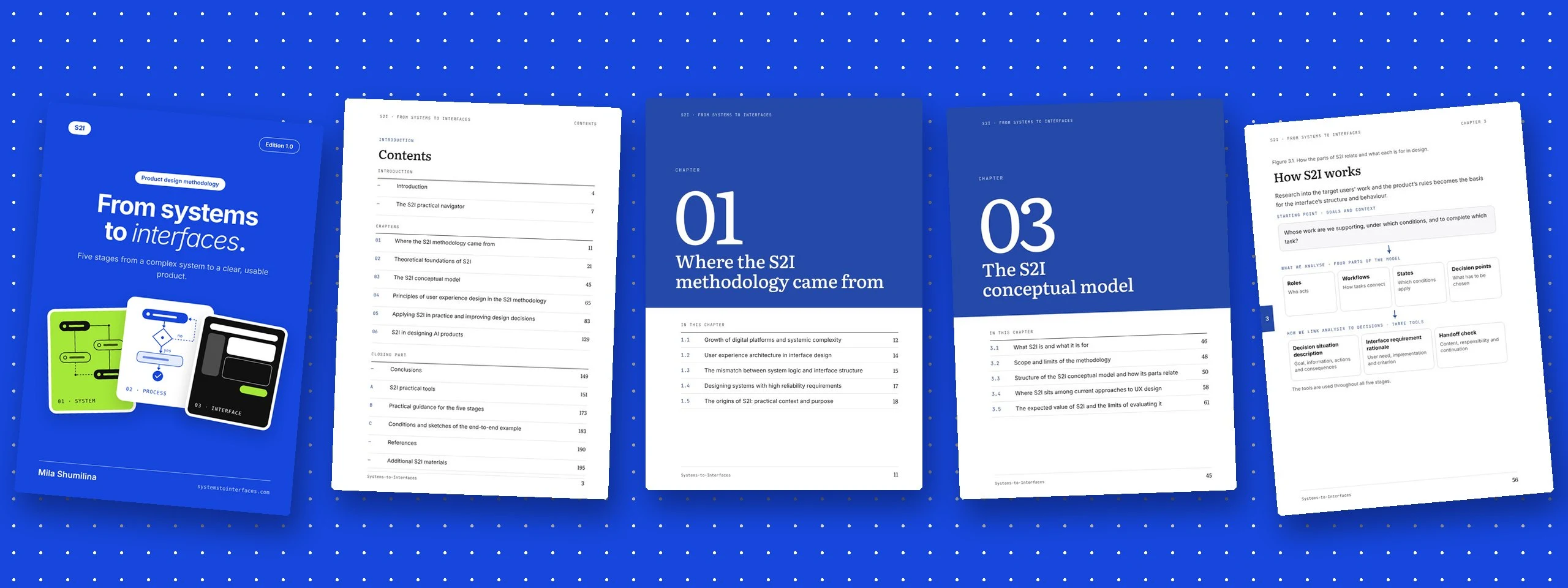
(05)Brand · website · productIdentity · web · distribution
Building a product around an idea.
Making the methodology available to a wider audience also meant creating a recognizable product around it.
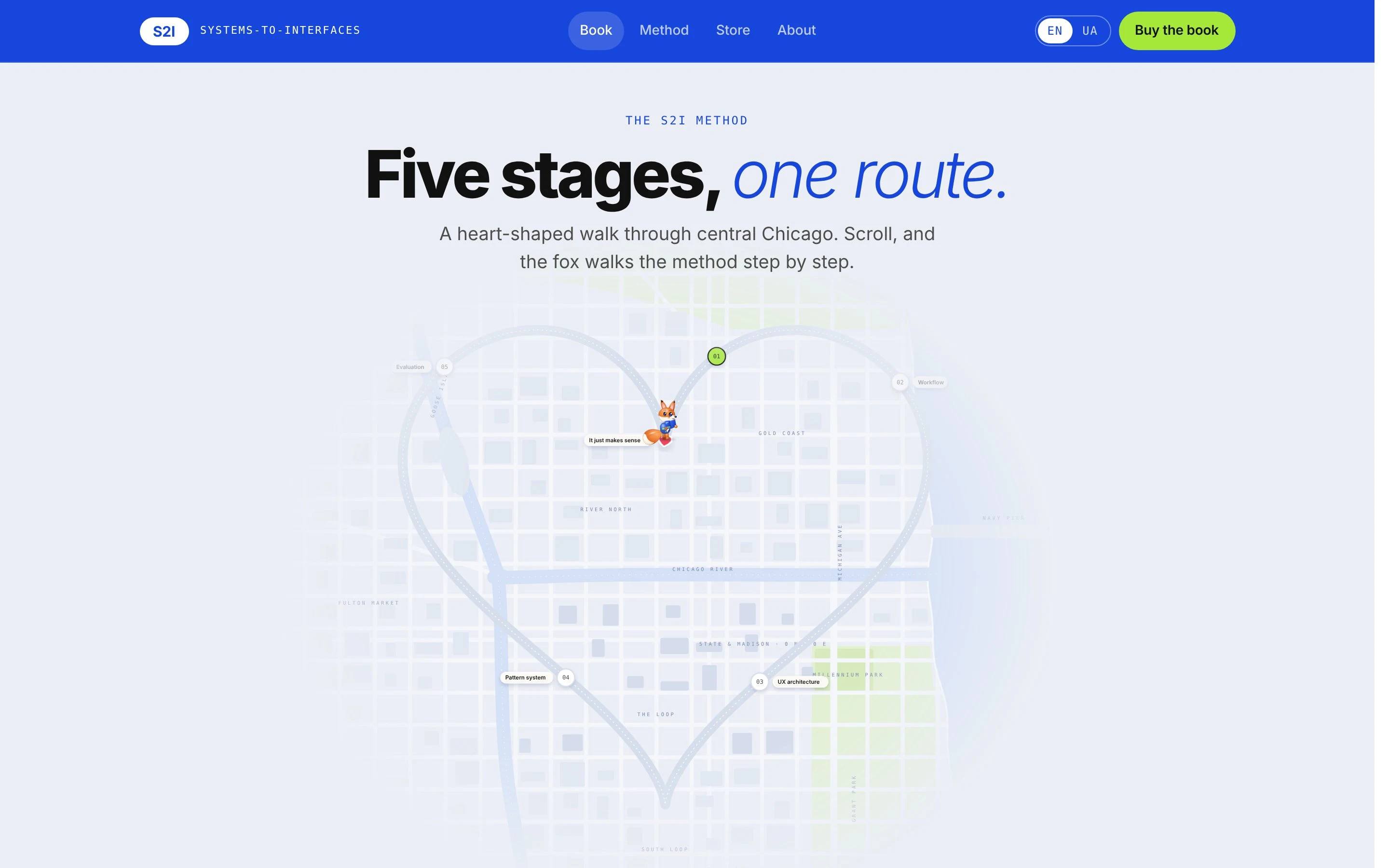
I developed the brand identity and design system, designed and built the website, and established the product offering and distribution approach. The website uses interactive storytelling, including a journey through Chicago, to introduce the methodology and invite designers to explore it.
Build one connected brand experience
The methodology, book, workbook and website share one visual identity and consistent messaging, creating a recognizable product across every touchpoint.
Make the website part of the experience
Rather than presenting the methodology through a conventional sales page, the website uses interactive storytelling to introduce its concepts and invite designers to explore the approach before purchasing.
(06)In my wordsBeyond the method

“A good methodology doesn't tell people what to design. It helps them see the system clearly enough to decide.”